
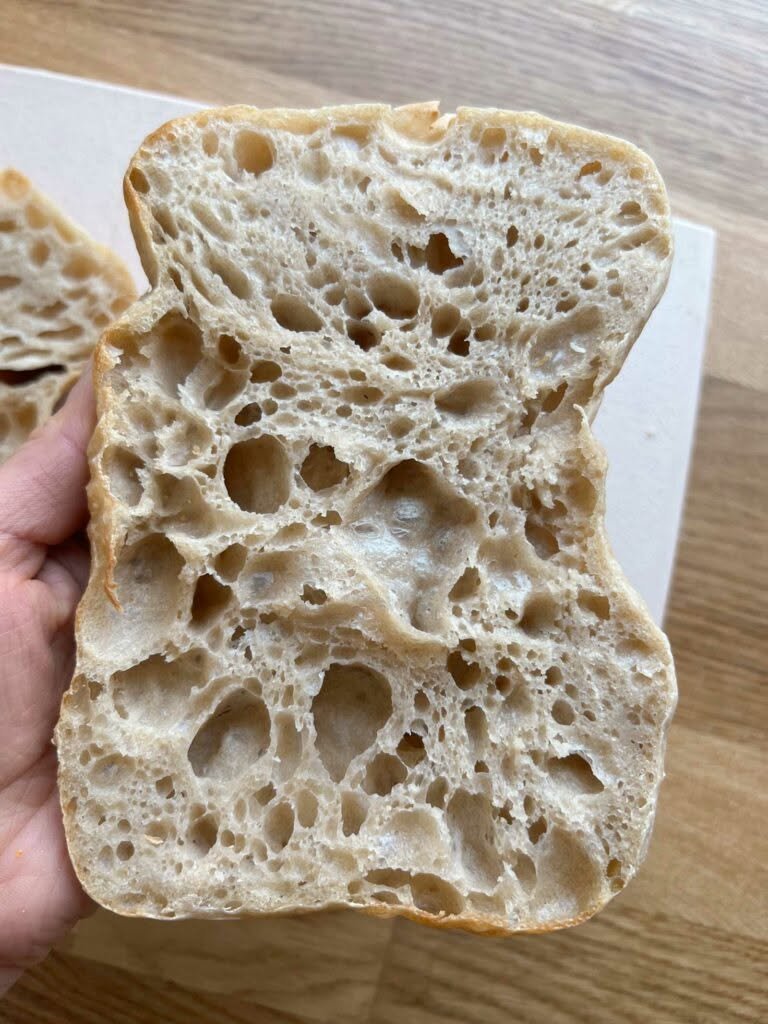
There’s something incredibly satisfying about baking a beautiful loaf of sourdough ciabatta at home. With its crisp golden crust, chewy bite, and signature open crumb filled with large air pockets, ciabatta is one of the most iconic Italian breads. When made with a naturally fermented sourdough starter instead of commercial yeast, it develops an even deeper flavor and a wonderfully light texture that’s hard to resist.
Unlike traditional sandwich bread, ciabatta is made with a high-hydration dough, meaning it contains more water than most bread recipes. This wetter dough creates the airy interior that makes ciabatta so special. While it can seem a little intimidating at first because the dough is sticky and loose, the process is surprisingly simple once you understand how gentle handling and patience work together to create bakery-quality results.
Whether you’re making sandwiches, garlic bread, bruschetta, or simply enjoying warm slices dipped in olive oil, this homemade sourdough ciabatta recipe is one you’ll want to bake again and again.
Why You’ll Love This Sourdough Ciabatta
This recipe offers everything you love about artisan bread while using only a handful of simple ingredients.
Reasons to love this recipe:
- Naturally fermented with an active sourdough starter
- Crispy golden crust with a chewy bite
- Light, airy interior with large open holes
- Rich flavor developed through long fermentation
- No commercial yeast required
- Perfect for sandwiches, paninis, toast, and dipping
- Easy enough for intermediate home bakers
Every loaf comes out rustic, flavorful, and beautifully imperfect—just the way authentic ciabatta should be.
Ingredients
For the Dough
- 500g bread flour
- 400g water (about 80% hydration)
- 100g active sourdough starter
- 10g salt
- 10g olive oil
Equipment
You’ll need:
- Large mixing bowl
- Kitchen scale
- Dough scraper or bench scraper
- Parchment paper
- Baking tray or baking stone
- Wire cooling rack
- Small metal pan for steam
- Spray bottle (optional)
Preparing Your Sourdough Starter
A healthy starter is the foundation of great ciabatta.
Feed your sourdough starter about 4 to 8 hours before mixing your dough. It should double in size, appear bubbly throughout, and have a pleasant tangy aroma. Many bakers like performing the float test, although it isn’t absolutely necessary if your starter is active and rising consistently.
Using an underactive starter will produce dense bread with poor oven spring, so this step is worth taking seriously.
Mixing the Dough
Begin by pouring the water into a large mixing bowl.
Add the active sourdough starter and stir until completely dissolved.
Next, add the bread flour and mix until no dry flour remains. The dough will appear shaggy, sticky, and rough.
Cover the bowl and allow the dough to rest for 30 minutes.
This resting period is called the autolyse, allowing the flour to fully absorb the water while beginning gluten development naturally.
Adding Salt and Olive Oil
After the autolyse, sprinkle the salt over the dough and drizzle in the olive oil.
Using damp hands, squeeze and fold everything together until fully incorporated.
The dough may initially feel slippery, but don’t worry—it will strengthen considerably during fermentation.
Stretch and Fold Method
Instead of kneading, ciabatta develops gluten through a series of stretch and folds.
Over the next two hours, perform four sets of stretch and folds, spacing each session about 30 minutes apart.
To do this:
- Wet your hands.
- Lift one side of the dough.
- Stretch it upward.
- Fold it back over itself.
- Rotate the bowl.
- Repeat on all four sides.
With each round, you’ll notice the dough becoming smoother, stronger, and much easier to handle.
Bulk Fermentation
Cover the bowl and allow the dough to ferment at room temperature for about 5 to 7 hours.
The exact timing depends on your kitchen temperature.
The dough should become noticeably puffy, increase by roughly 50–75%, and develop visible bubbles across the surface.
Avoid rushing this stage because proper fermentation is essential for achieving the classic open crumb.
Overnight Cold Fermentation
Transfer the dough into a lightly oiled container.
Cover tightly and refrigerate for 12 to 18 hours.
This slow overnight fermentation enhances flavor, improves texture, and makes the dough much easier to shape.
Many artisan bakers consider this step the secret behind exceptional sourdough bread.
Shaping the Ciabatta
Generously flour your work surface.
Carefully turn out the dough while preserving as many air bubbles as possible.
Using a bench scraper, divide the dough into two equal portions.
Rather than tightly shaping the dough, gently form each portion into a rustic rectangle.
Remember that ciabatta is meant to look natural and slightly uneven.
Avoid pressing the dough flat, as this removes the precious air pockets you’ve spent hours developing.
Final Proof
Transfer each loaf onto parchment paper.
Dust lightly with flour.
Cover loosely with a clean towel and allow the loaves to proof for 45 to 60 minutes.
During this time, they’ll become slightly puffier while maintaining their rustic shape.
Baking
Preheat your oven to 475°F (245°C) for at least 30 minutes.
Place an empty metal pan on the bottom oven rack while preheating.
Just before placing the bread inside, carefully pour one cup of hot water into the empty pan.
The steam helps create ciabatta’s famous crisp crust.
Bake for:
- 15 minutes with steam
- Remove the steam pan
- Continue baking another 10 to 15 minutes
The finished loaves should have a deep golden crust and sound hollow when tapped.
For the most accurate result, the internal temperature should reach approximately 205–210°F (96–99°C).
Cooling
Transfer the bread immediately to a wire rack.
Although it’s tempting to slice into warm bread, allow it to cool for at least one hour.
This resting period allows the crumb to fully set and prevents a gummy interior.
Storage Tips
Fresh ciabatta is best enjoyed the day it’s baked, but leftovers store well.
Keep the bread in a paper bag or bread box at room temperature for up to three days.
For longer storage, slice the loaf and freeze it for up to three months. Simply toast frozen slices whenever needed.
Serving Suggestions
Sourdough ciabatta is incredibly versatile.
Serve it with:
- Olive oil and balsamic vinegar
- Homemade garlic butter
- Bruschetta
- Italian soups
- Pasta dinners
- Paninis
- Gourmet sandwiches
- Breakfast toast
- Avocado toast
- Cheese boards
Its chewy texture makes it one of the best breads for hearty sandwiches.
Pro Tips
For the best results, remember these simple tips:
- Use high-protein bread flour.
- Never add extra flour to the dough.
- Handle the dough gently.
- Allow enough fermentation time.
- Always bake with steam.
- Preheat the oven thoroughly.
- Let the bread cool completely before slicing.
Small improvements in handling make a huge difference in the finished loaf.
Common Problems
Dense Bread
Usually caused by inactive starter or under-fermentation.
Flat Loaf
Most often caused by over-proofing or rough handling during shaping.
Small Air Holes
Typically the result of adding too much flour or pressing too much air out of the dough.
Thick Crust
Usually happens when insufficient steam is used during baking.
Nutrition Information (Per Slice)
- Calories: 140
- Protein: 5g
- Carbohydrates: 28g
- Fat: 1g
- Fiber: 1g
Values are approximate and may vary depending on slice size.
Final Thoughts
Homemade Sourdough Ciabatta Bread combines the rustic beauty of traditional Italian baking with the incredible flavor of natural fermentation. While the dough may seem challenging because of its high hydration, patience and gentle handling are rewarded with a loaf that rivals any artisan bakery. From its crackling crust to its soft, airy interior, every slice is packed with flavor and texture.
Whether you’re building the perfect sandwich, serving it alongside pasta, dipping it into olive oil, or enjoying a warm slice with butter, this sourdough ciabatta is guaranteed to become one of your favorite homemade breads. Once you’ve experienced the taste of fresh, naturally fermented ciabatta straight from your own oven, you’ll understand why this timeless Italian classic has remained a favorite among bread lovers around the world.
