
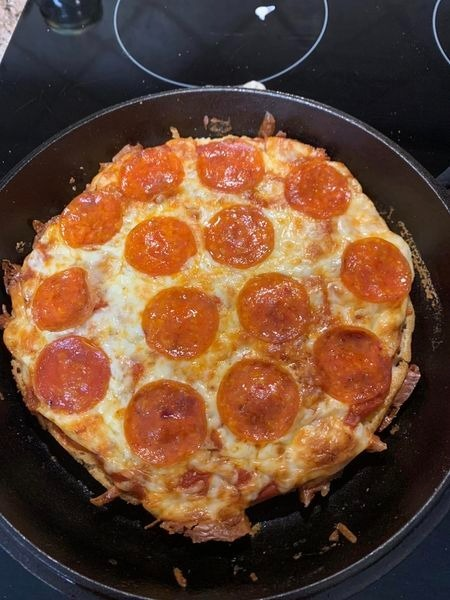
There’s something irresistible about a hot, bubbling pizza covered with melted cheese and crispy pepperoni. This Skillet Pepperoni Pizza is one of the easiest ways to make a delicious homemade pizza when you want something comforting without complicated equipment or a pizza oven.
The pizza is cooked directly in a skillet, giving the bottom a wonderfully crisp texture while the cheese melts into a golden, bubbly layer on top. Pepperoni becomes slightly crispy around the edges, releasing its savory flavor into the cheese and sauce. The result is a pizza that is crispy underneath, cheesy in the center, and packed with classic pepperoni flavor.
This recipe is perfect for a quick family dinner, weekend lunch, game night, or whenever a pizza craving hits. You can use homemade dough or your favorite store-bought pizza dough, and you can easily customize the toppings.
Why You’ll Love This Skillet Pizza
There are plenty of reasons to add this recipe to your regular dinner rotation.
First, you don’t need a special pizza oven. A regular oven-safe skillet can produce excellent results.
Second, the skillet helps create a beautifully crisp bottom. The direct contact between the dough and the hot pan allows the crust to develop a golden, crunchy exterior while the inside stays soft and chewy.
The recipe is also extremely customizable. Keep it simple with mozzarella, pizza sauce, and pepperoni, or add mushrooms, onions, bell peppers, olives, sausage, or extra cheese.
Most importantly, this pizza is incredibly satisfying. The combination of tomato sauce, stretchy mozzarella, crispy pepperoni, and a golden crust makes every bite delicious.
Ingredients
For the Pizza Dough
- 2½ cups all-purpose flour
- 1 teaspoon instant yeast
- 1 teaspoon granulated sugar
- 1 teaspoon salt
- 1 cup warm water
- 1 tablespoon olive oil
You can also use approximately 1 pound of prepared pizza dough if you want to save time.
For the Topping
- ½ cup pizza sauce or marinara sauce
- 2 cups shredded mozzarella cheese
- 20–30 slices pepperoni
- 1 tablespoon olive oil
- ¼ teaspoon dried oregano
- ¼ teaspoon garlic powder
- 2 tablespoons grated Parmesan cheese
- A pinch of red pepper flakes, optional
Optional Toppings
You can add:
- Sliced mushrooms
- Diced bell peppers
- Thinly sliced onions
- Black olives
- Cooked sausage
- Cooked bacon
- Jalapeños
- Fresh basil
- Extra mozzarella
- Cheddar cheese
- Italian seasoning
How to Make Skillet Pepperoni Pizza
Step 1: Prepare the Dough
If you’re making homemade dough, begin by adding the warm water to a large mixing bowl.
The water should be warm but not extremely hot. Add the yeast and sugar and stir gently. Let the mixture sit for about 5 minutes if you’re using active dry yeast.
Add the flour, salt, and olive oil.
Mix everything together with a wooden spoon until a rough dough forms.
Transfer the dough to a lightly floured surface and knead for approximately 6–8 minutes. The dough should become smooth and elastic.
If the dough feels extremely sticky, add a little flour, one tablespoon at a time. Avoid adding too much flour because an overly dry dough can create a tough crust.
Shape the dough into a ball.
Place it in a lightly oiled bowl and cover it with a clean kitchen towel or plastic wrap.
Allow it to rise for approximately 1 hour, or until it has roughly doubled in size.
Step 2: Prepare the Skillet
For this recipe, a 10- or 12-inch oven-safe skillet works very well.
Cast iron is especially useful because it holds heat beautifully and helps create a crisp bottom crust.
Add about 1 tablespoon of olive oil to the skillet and spread it evenly across the bottom.
Don’t be afraid to lightly coat the sides as well. This helps prevent sticking and adds flavor to the crust.
Step 3: Shape the Pizza Dough
Once the dough has risen, gently punch it down to remove some of the excess air.
Transfer it to your work surface and gently stretch it into a round shape.
You don’t need to make the dough perfectly circular. The rustic appearance is part of the charm of skillet pizza.
Place the dough inside the prepared skillet.
Using your fingertips, gently press the dough outward until it reaches most of the way toward the edges of the pan.
If the dough keeps shrinking back, let it rest for 5–10 minutes before continuing. This gives the gluten time to relax and makes the dough much easier to stretch.
For a thicker crust, leave the dough slightly thicker around the edges.
For a thinner, crispier pizza, press the dough more evenly toward the sides.
Step 4: Add the Pizza Sauce
Spread approximately ½ cup of pizza sauce over the dough.
Use the back of a spoon to spread the sauce evenly.
Leave a small border around the edge for the crust.
Don’t use too much sauce. Excess sauce can make the center of the pizza soggy and prevent the crust from becoming crisp.
If you prefer a saucier pizza, you can add a little more, but it’s better to start with a moderate amount.
Step 5: Add the Cheese
Sprinkle the shredded mozzarella evenly over the sauce.
For the best texture, use freshly shredded mozzarella if possible. Pre-shredded cheese is convenient, but freshly shredded mozzarella generally melts more smoothly.
Make sure the cheese reaches close to the edges without completely covering the crust.
Add Parmesan cheese for extra savory flavor.
The Parmesan also contributes to the golden-brown appearance as the pizza bakes.
Step 6: Arrange the Pepperoni
Now comes the best part.
Arrange the pepperoni slices over the cheese.
You can place them close together if you love pepperoni, or leave a little space between each slice.
As the pizza cooks, the pepperoni will release some of its flavorful oils. Those oils mingle with the melted cheese and create the classic pepperoni pizza flavor.
For extra crispy pepperoni, place a few slices around the outer edges where they can brown more intensely.
Step 7: Season the Pizza
Sprinkle the top with dried oregano and garlic powder.
If you enjoy a little heat, add a pinch of crushed red pepper flakes.
You can also sprinkle a little Italian seasoning over the top.
At this point, your skillet pizza should already look incredibly appetizing.
Step 8: Bake the Pizza
Preheat your oven to 450°F (230°C).
Place the skillet in the preheated oven.
Bake the pizza for approximately 15–20 minutes, depending on the thickness of the dough and your oven.
Keep an eye on the pizza during the final few minutes.
The cheese should be fully melted and bubbling, while the pepperoni should begin developing crispy, browned edges.
The crust should be golden brown around the edges.
If you want an extra-dark, bubbly cheese topping, you can switch the oven to broil for the final 1–2 minutes.
Watch it carefully during broiling because the cheese can brown very quickly.
Step 9: Check the Bottom
Before removing the pizza, carefully lift one edge with a spatula.
The bottom should be golden brown and crisp.
If the top is perfectly cooked but the bottom still needs more color, place the skillet over medium heat on the stovetop for 1–3 minutes.
Be careful not to burn the crust.
The exact cooking time can vary depending on your skillet, stovetop, and oven, so keep an eye on the pizza rather than relying only on the clock.
Step 10: Let the Pizza Rest
Remove the skillet from the oven using oven mitts.
Remember that the skillet handle will be extremely hot.
Allow the pizza to rest for approximately 5 minutes before slicing.
This short resting period allows the cheese to settle slightly and makes the pizza easier to cut.
Sprinkle fresh basil or additional Parmesan over the top if desired.
Slice into wedges and serve warm.
How to Get an Extra Crispy Crust
One of the best features of skillet pizza is its crispy bottom.
To make it even better, follow a few simple tips.
Use Enough Oil
A small amount of olive oil in the skillet helps the dough brown beautifully.
You don’t need to flood the pan with oil. Just enough to coat the bottom and sides is sufficient.
Preheat Your Oven
Always make sure the oven is fully preheated before baking.
Starting with a properly heated oven gives the dough a strong initial burst of heat.
Use a Cast-Iron Skillet
Cast iron retains heat exceptionally well and is ideal for creating a crispy pizza crust.
Don’t Overload the Pizza
It can be tempting to add lots of sauce, cheese, and toppings, but too many toppings can make the pizza heavy and prevent the center from cooking properly.
Keep the toppings balanced.
How to Make the Crust Extra Cheesy
If you love cheese, try adding a thin layer of mozzarella directly around the outer edge of the dough before baking.
As it melts, the cheese becomes golden and crispy.
You can also combine different cheeses.
A great combination is:
- Mozzarella for stretchiness
- Parmesan for salty flavor
- Provolone for richness
A small amount of cheddar can also be added if you enjoy a stronger cheese flavor.
Homemade Pizza Sauce
If you don’t have pizza sauce available, you can easily make a quick homemade version.
Combine:
- 1 cup crushed tomatoes
- 1 tablespoon tomato paste
- ½ teaspoon garlic powder
- ½ teaspoon dried oregano
- ¼ teaspoon salt
- ¼ teaspoon black pepper
- 1 teaspoon olive oil
Mix everything together.
For a smoother sauce, blend the ingredients.
You don’t necessarily need to cook the sauce before putting it on the pizza. It will cook in the oven along with the dough.
If you prefer a richer sauce, simmer it for approximately 10 minutes before using it.
Different Ways to Customize This Pizza
The classic pepperoni version is delicious, but you can easily turn this recipe into different pizzas.
Mushroom Pepperoni Pizza
Add thinly sliced mushrooms underneath the pepperoni.
For best results, sauté the mushrooms first to remove some of their moisture.
Spicy Pepperoni Pizza
Add sliced jalapeños and crushed red pepper flakes.
You can also drizzle a little hot sauce over the finished pizza.
Supreme Skillet Pizza
Add pepperoni, mushrooms, onions, bell peppers, and olives.
Be careful not to overload the pizza with toppings.
Meat Lovers Pizza
Add pepperoni, cooked sausage, bacon, and ham.
This version is especially hearty and filling.
Margherita Style
Skip the pepperoni and use fresh mozzarella, tomato slices, fresh basil, and a drizzle of olive oil.
Extra Cheese Pizza
Use mozzarella, Parmesan, and provolone for an especially rich and cheesy pizza.
Can You Use Store-Bought Pizza Dough?
Absolutely.
Store-bought pizza dough is an excellent shortcut when you don’t have time to prepare homemade dough.
Allow refrigerated dough to sit at room temperature for approximately 30–60 minutes before shaping it.
This makes the dough easier to stretch and reduces the chance of it shrinking back.
Simply shape the dough, place it in the oiled skillet, add the toppings, and bake.
Can You Make This Pizza Without a Cast-Iron Skillet?
Yes.
Any oven-safe skillet can work.
A heavy stainless-steel or oven-safe nonstick skillet can also produce good results.
However, always check that your skillet and its handle are rated for the temperature you’re using.
If you’re unsure whether your skillet is oven-safe, transfer the dough to a suitable baking pan instead.
Storage Instructions
If you have leftover pizza, allow it to cool completely before storing it.
Place the slices in an airtight container and refrigerate for up to 3–4 days.
For longer storage, wrap individual slices tightly and freeze them.
Frozen pizza slices can be reheated in the oven or air fryer until hot and crispy.
For the best texture, avoid microwaving the pizza for too long because it can make the crust soft.
How to Reheat Skillet Pizza
The oven or air fryer is the best way to bring leftover pizza back to life.
Oven Method
Preheat the oven to 375°F (190°C).
Place the pizza slices on a baking sheet and heat for approximately 8–10 minutes.
Air Fryer Method
Place the slice in an air fryer and heat at approximately 350°F (175°C) for 3–5 minutes.
The crust should become crisp again while the cheese melts.
Stovetop Method
Place a slice in a skillet over medium-low heat.
Cover the skillet with a lid and heat for several minutes.
This method helps crisp the bottom while gently melting the cheese.
Tips for Beginners
If this is your first time making homemade pizza, don’t worry if your dough isn’t perfectly shaped.
Pizza is one of the most forgiving recipes.
The most important things to remember are:
- Don’t use extremely hot water with the yeast.
- Don’t add excessive flour.
- Let the dough rise properly.
- Don’t overload the pizza with sauce or toppings.
- Preheat the oven completely.
- Watch the pizza closely during the final few minutes.
- Allow the pizza to rest before slicing.
Even if your pizza doesn’t look perfect, it will likely still taste fantastic.
Frequently Asked Questions
Can I make this pizza with a thin crust?
Yes. Simply stretch the dough more thinly across the skillet and use a moderate amount of toppings.
A thin crust will generally cook faster, so begin checking it earlier.
Can I make a thicker crust?
Absolutely. Leave the dough thicker around the edges and allow it a little extra time to rise before adding toppings.
You may also need several additional minutes of baking time.
Why is my pizza crust soggy?
A soggy crust can result from too much sauce, too many toppings, underbaking, or insufficient preheating.
Try using less sauce and toppings and make sure your oven reaches the correct temperature before baking.
Why did my dough shrink?
The gluten in pizza dough can sometimes cause it to spring back when stretched.
Let the dough rest for 5–10 minutes and try again.
Can I prepare the dough ahead of time?
Yes. Pizza dough can be prepared ahead and refrigerated. Allow it to come closer to room temperature before shaping.
Can I use other types of cheese?
Yes. Mozzarella is the classic choice, but provolone, Parmesan, cheddar, fontina, or a combination of cheeses can work beautifully.
Nutrition Information
Nutrition will vary depending on the exact ingredients, portion size, cheese, pepperoni, and dough used.
For a more accurate nutritional calculation, enter the exact ingredients and quantities into a nutrition calculator.
If you’re following a specific dietary plan, check the labels of your individual ingredients carefully.
Final Thoughts
This Easy Skillet Pepperoni Pizza is proof that you don’t need a fancy pizza oven or complicated equipment to make an incredible homemade pizza.
With a simple dough, flavorful pizza sauce, plenty of mozzarella, and crispy pepperoni, you can create a restaurant-style meal right in your own kitchen.
The skillet gives the crust a delicious golden crunch while the center stays soft and chewy. Meanwhile, the bubbling cheese and browned pepperoni create the classic pizza flavor everyone loves.
It’s perfect for busy weeknights, family dinners, parties, movie nights, or simply satisfying a serious pizza craving.
Once you try making pizza this way, you may find yourself reaching for your skillet every time you’re in the mood for something cheesy, crispy, and comforting.
Serve it hot, slice it generously, and enjoy every cheesy, crispy bite!
