
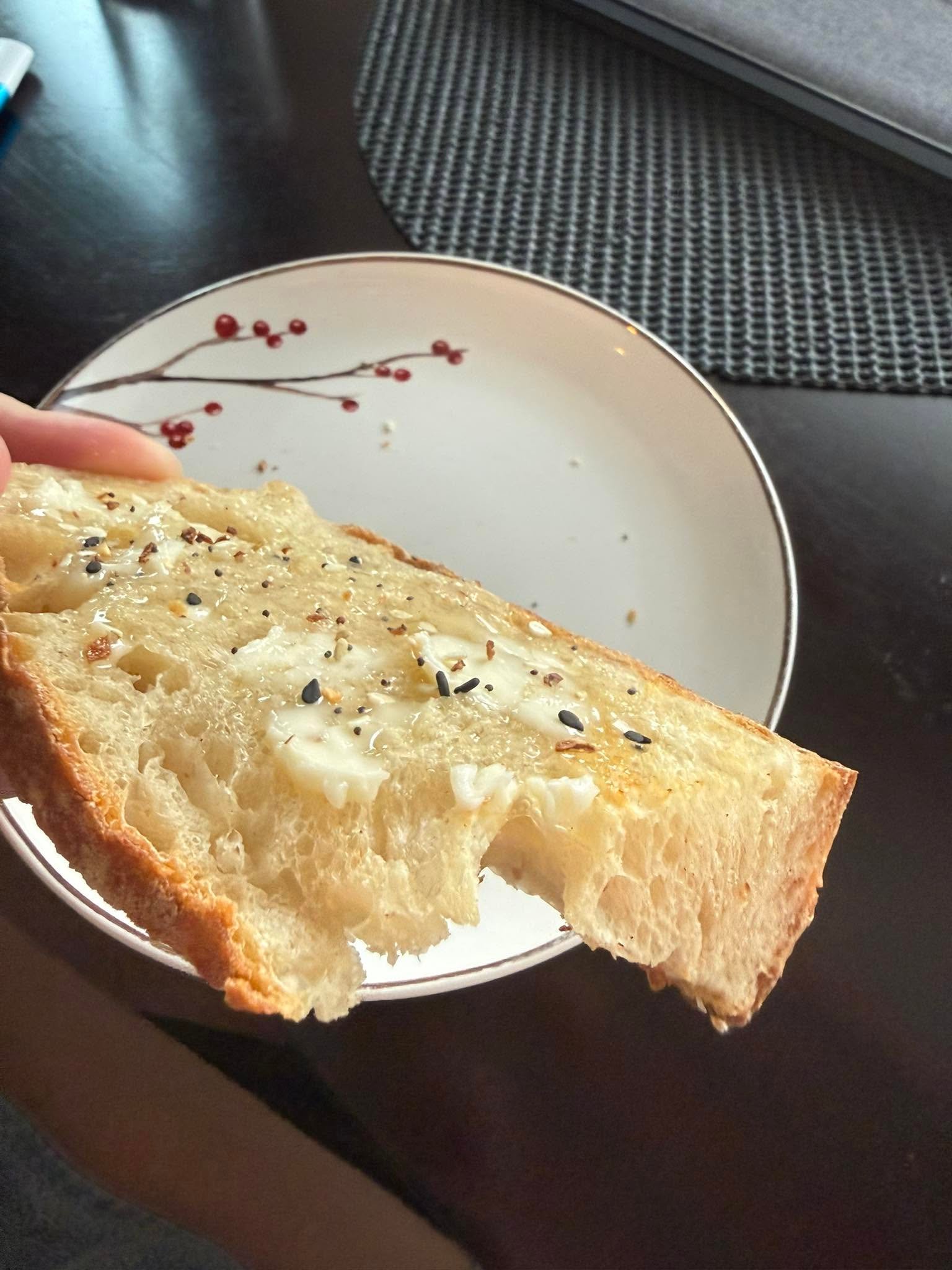
There is something incredibly comforting about a thick slice of sourdough toast topped with melting butter. The combination of a crisp golden crust, soft airy crumb, and rich buttery flavor creates a simple yet unforgettable eating experience. While sourdough bread has been enjoyed for centuries, it has recently become a favorite among home bakers because of its natural fermentation, complex flavor, and beautiful texture.
This rustic buttered sourdough toast is proof that great food doesn’t have to be complicated. With just a few ingredients, you can create a delicious breakfast, snack, or side dish that feels both wholesome and indulgent. The open crumb of sourdough allows butter to melt into every nook and cranny, creating pockets of rich flavor in every bite. A light sprinkle of seasoning on top adds the perfect finishing touch.
Whether you are using freshly baked homemade sourdough or a loaf from your favorite bakery, this recipe is an easy way to elevate a simple slice of bread into something truly special.
Why You’ll Love This Recipe
One of the best things about sourdough toast is its versatility. It can be enjoyed on its own, paired with eggs for breakfast, served alongside soup for lunch, or transformed into a gourmet snack with creative toppings.
Unlike regular bread, sourdough develops flavor through a natural fermentation process. This process not only creates its signature tangy taste but also contributes to its chewy texture and beautiful air pockets. When toasted, the bread becomes wonderfully crisp while maintaining a soft interior.
The addition of butter creates a rich and satisfying contrast to the slightly tangy bread. Every bite offers a perfect balance of crunch, softness, and flavor.
Ingredients
For the Sourdough Loaf
- 500g bread flour
- 350g water
- 100g active sourdough starter
- 10g salt
For the Toast
- 2 thick slices sourdough bread
- 2 tablespoons salted butter
- 1 teaspoon everything bagel seasoning
- Optional drizzle of honey
Instructions
Step 1: Mix the Dough
In a large mixing bowl, combine the water and active sourdough starter. Stir until the starter is mostly dissolved.
Add the flour and mix until no dry flour remains. The dough will look rough and shaggy at this stage.
Cover the bowl and let it rest for 30 minutes. This resting period, known as autolyse, helps hydrate the flour and improves gluten development.
Step 2: Add Salt
Sprinkle the salt over the dough and mix thoroughly until fully incorporated.
The dough may feel sticky, but this is completely normal.
Step 3: Stretch and Fold
Over the next two hours, perform four sets of stretch-and-folds every 30 minutes.
To do this:
- Grab one side of the dough.
- Stretch it upward.
- Fold it over itself.
- Rotate the bowl and repeat.
These folds strengthen the dough without intensive kneading.
Step 4: Bulk Fermentation
Cover the bowl and allow the dough to ferment at room temperature for 4 to 6 hours.
The dough should become puffy and increase in volume by approximately 50%.
Fermentation time may vary depending on room temperature and starter activity.
Step 5: Shape the Loaf
Transfer the dough onto a lightly floured work surface.
Shape it into a round loaf by gently pulling the dough toward yourself while rotating.
Place the shaped dough seam-side up into a proofing basket or bowl lined with a floured towel.
Step 6: Cold Proof
Cover the dough and refrigerate overnight for 8 to 12 hours.
This slow fermentation develops deeper flavor and improves the final texture.
Step 7: Bake
Preheat your oven to 475°F (245°C) with a Dutch oven inside.
Carefully transfer the dough onto parchment paper and score the top with a sharp blade.
Bake covered for 20 minutes.
Remove the lid and continue baking for an additional 20 to 25 minutes until the crust is deep golden brown.
Allow the bread to cool completely before slicing.
Preparing the Toast
Slice the sourdough loaf into thick pieces.
Toast the bread using a toaster, skillet, or oven until golden brown and crispy around the edges.
The goal is to create a crunchy exterior while preserving the soft and airy interior.
Once toasted, immediately spread butter over the warm bread.
The heat from the toast will melt the butter into the bread’s open crumb, creating a rich and flavorful bite.
Finish with a sprinkle of everything bagel seasoning or your favorite spice blend.
Serving Suggestions
This sourdough toast can be enjoyed in many ways:
- With scrambled eggs
- Topped with avocado
- Served with soup
- Spread with cream cheese
- Paired with smoked salmon
- Drizzled with honey
- Served alongside fresh fruit
Its versatility makes it suitable for breakfast, lunch, dinner, or a quick snack.
Tips for the Best Sourdough Toast
Use Fresh Bread
Freshly baked sourdough provides the best flavor and texture.
Slice Thick
Thicker slices create a better contrast between the crispy crust and soft interior.
Toast Carefully
Avoid excessive browning, which can overpower the bread’s natural flavor.
Use Quality Butter
Good-quality butter makes a noticeable difference in taste.
Experiment with Toppings
Try garlic butter, herbs, jam, peanut butter, or cheese for different flavor combinations.
Storage
Store your sourdough loaf in a bread box or paper bag at room temperature for up to three days.
For longer storage, slice the loaf and freeze individual pieces.
Toast directly from frozen whenever needed.
Final Thoughts
Rustic Buttered Sourdough Toast proves that simple ingredients can create something extraordinary. The naturally fermented bread, crispy toasted crust, rich melted butter, and flavorful seasoning come together to create a satisfying and comforting dish that never goes out of style.
Whether you’re enjoying it with your morning coffee, serving it with a hearty meal, or simply savoring a slice on its own, this sourdough toast is a reminder that some of life’s greatest pleasures are often the simplest. Every crunchy, buttery bite celebrates the beauty of homemade bread and the timeless appeal of good food shared with family and friends. 🍞✨
