
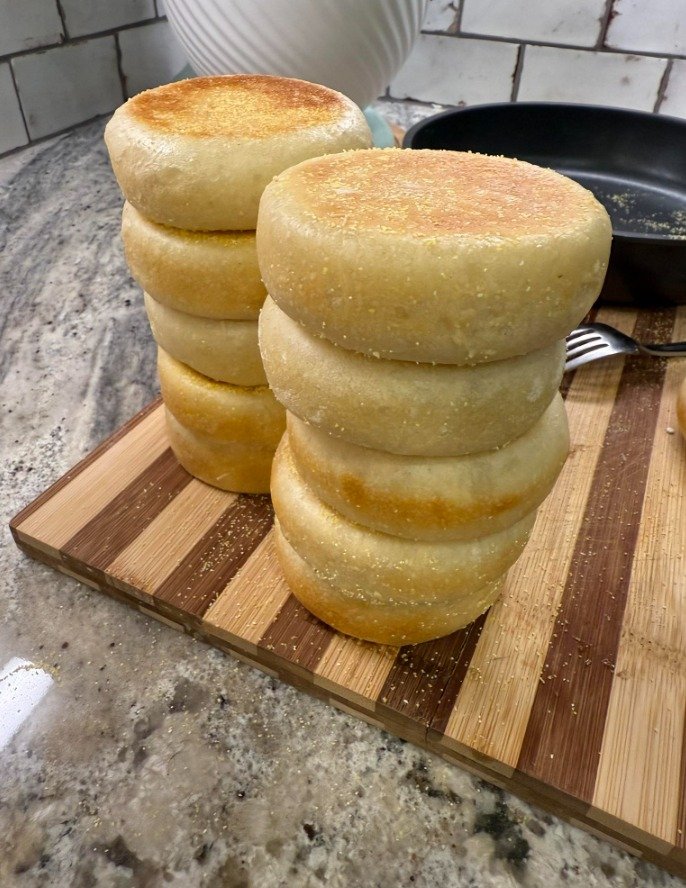
English Muffins
Introduction
English muffins are a classic breakfast favorite known for their soft centers, lightly crisp edges, and those little pockets that catch melted butter and other toppings. They are great for a simple breakfast, a breakfast sandwich, or even a quick afternoon snack.
Unlike regular bread, English muffins are cooked on a skillet or griddle instead of being baked in the oven. This simple cooking method gives them their signature golden crust and tender, chewy middle.
Making English muffins at home is easier than it may seem. With a few basic ingredients and some rising time, you can make a fresh batch that tastes much better than many packaged versions. They can be served warm with butter and jam or used for savory toppings such as eggs, cheese, and ham.
Once you make them yourself, homemade English muffins can easily become a regular part of your breakfast routine.
Why Make English Muffins at Home?
Fresh Ingredients: You know exactly what goes into your muffins, with no need for extra preservatives.
Better Flavor: Freshly prepared dough develops a rich flavor and a light fermented taste.
Great Texture: The inside stays soft and chewy while the outside becomes beautifully golden when cooked.
Many Ways to Serve: Enjoy them with butter, jam, honey, eggs, cheese, or your favorite breakfast fillings.
Budget-Friendly: A homemade batch costs much less than buying premium bakery-style English muffins.
Ingredients
This recipe makes approximately 8–10 English muffins.
- 3 ½ cups (420 g) all-purpose flour or bread flour
- 1 ¼ cups (300 ml) warm milk
- 2 tablespoons unsalted butter, melted
- 1 tablespoon sugar
- 2 teaspoons instant yeast or 1 packet active dry yeast
- 1 teaspoon salt
- 1 egg, optional
- Cornmeal, for dusting
How to Make English Muffins
1. Mix the Dough
Start by pouring the warm milk into a large mixing bowl. Add the sugar and yeast, then stir gently. If you are using active dry yeast, allow the mixture to rest for about 5 minutes until it becomes slightly foamy. When using instant yeast, you can move on to the next step without waiting.
Add the melted butter, salt, flour, and egg if you want a richer dough. Stir everything together until the ingredients form a rough, sticky dough.
Transfer the dough to a lightly floured work surface. Knead it for about 8–10 minutes, or until it becomes smooth, soft, and elastic. A stand mixer fitted with a dough hook can also be used to make this step easier.
2. Let the Dough Rise
Lightly grease a clean bowl and place the dough inside. Cover the bowl with a kitchen towel or plastic wrap.
Leave it in a warm area for about 1–2 hours. The dough should expand to roughly twice its original size.
The exact rising time can vary depending on the temperature of your kitchen, so focus on the dough’s size rather than the clock.
3. Cut and Shape the Muffins
Once the dough has risen, gently press it down to remove excess air. Place it on a lightly floured surface and roll it out until it is around ½–¾ inch thick.
Use a round cookie cutter, biscuit cutter, or drinking glass about 3 inches wide to cut the dough into circles.
Collect any leftover dough, gently bring it together, roll it out again, and cut additional rounds. Try not to overwork the dough during this process.
Sprinkle cornmeal over a baking sheet and arrange the dough rounds on top. Lightly dust the tops with additional cornmeal.
Cover the muffins with a clean towel and let them rest for another 30–45 minutes. They should look slightly swollen and airy before cooking.
4. Cook on a Skillet
Place a large nonstick skillet or griddle over medium-low heat. You want the pan hot enough to brown the muffins slowly without burning the outside.
Carefully place 3–4 muffins into the skillet, leaving enough room between them so they can cook evenly.
Cook for approximately 6–7 minutes on the first side. Carefully flip them and cook for another 6–7 minutes.
Keep the heat on the lower side. If the muffins are becoming dark too quickly while the centers are still doughy, reduce the heat and allow them to cook more slowly.
Once the muffins are golden brown and cooked through, transfer them to a wire rack. Continue cooking the remaining dough in batches.
5. Cool and Serve
Allow the English muffins to cool for a few minutes before serving.
For the best texture, use a fork to gently split each muffin instead of cutting straight through it with a knife. This helps keep the uneven interior texture and creates the classic little pockets English muffins are known for.
Toast the halves until lightly crisp, then serve them with butter, jam, honey, cream cheese, eggs, or your favorite toppings.
Helpful Tips
- Don’t make the milk too hot: Very hot milk can damage the yeast. It should feel warm rather than hot.
- Watch the heat: Medium-low heat works best because the muffins need enough time to cook through.
- Don’t skip the second rise: This short resting period helps create lighter, softer muffins.
- Use cornmeal: It helps prevent sticking and gives the muffins their classic slightly textured surface.
- Split with a fork: This helps maintain the soft, uneven crumb inside.
- Cook in batches: Avoid overcrowding the skillet so each muffin gets even heat.
Nutrition Information
Approximate nutrition per muffin when the recipe makes 10 muffins:
- Calories: 180
- Carbohydrates: 33 g
- Protein: 5 g
- Fat: 3 g
- Fiber: 1 g
Nutrition values can vary depending on the flour, milk, butter, egg, and final muffin size.
Final Thoughts
Homemade English muffins are a simple and delicious way to make breakfast feel special. Their soft centers, golden surfaces, and crisp texture after toasting make them perfect for both sweet and savory toppings.
The dough does require some time to rise, but most of the work is simple. Once the muffins are shaped, they are cooked right on the stovetop, so there is no need to heat up the oven.
Make a batch on the weekend, toast them throughout the week, and enjoy them with butter and jam or turn them into hearty breakfast sandwiches. Fresh, warm, and homemade, these English muffins are a great addition to any breakfast table.
 limitlessmindset027@gmail.com